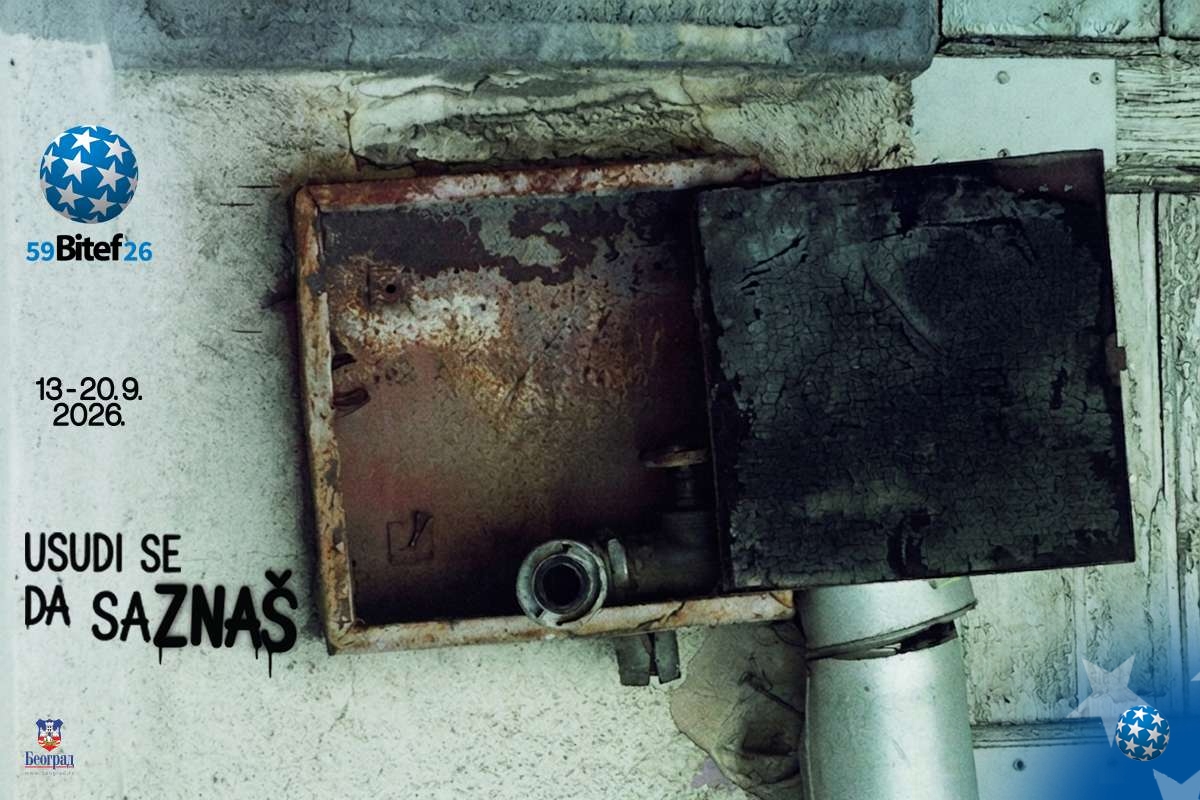
The 59th edition of Bitef will take place in Belgrade from 13 to 20 September 2026.Curated by Spasoje Z. Milovanovic and presented under the slogan “Dare to Find Out” this year’s selection brings together performances from seven countries: Bulgaria, Moldova, Georgia, Türkiye, Tunisia and Serbia, as well as a performance from Russia, presented as part of the Festival’s accompanying programme.
The performances will take place at Belgrade’s theatre venues, including Atelje 212, the National Theatre, Bitef Theatre, Belgrade Drama Theatre, Theatre on Terazije, and the Yugoslav Drama Theatre.
Festival curator Spasoje Z. Milovanovic has explained that he shaped the selection in a context where even the very existence of the festival has become a subject of public and political scrutiny, without starting from a predetermined theme, poetics, or stance.
What brings these diverse performances together is, above all, their refusal to substitute the complexity of the world with easy answers or ready-made explanations.
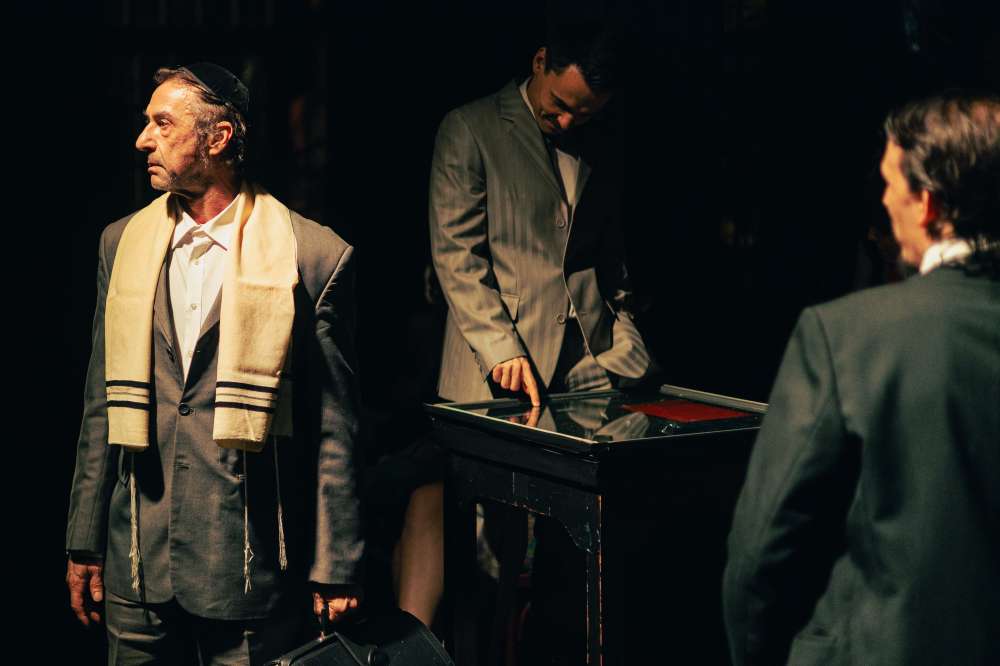
Shakespeare’s The Merchant of Venice, produced by KPGT (Serbia) and directed by StrahinjaPadezanin, is set in Venice in 1938, at a time when Italy’s fascist regime was using racial laws to strip Jews of their citizenship and their rights to public office and mixed marriage—all in the name of a homogeneity the regime presented as a defence of the nation. Yet the production is not simply about history. It is about how an enemy is created.
Albion by Mike Bartlett, directed by ZafirRadjab and produced by the Nikolay Binev Youth Theatre in Sofia (Bulgaria), raises a different question: What does it mean to try to bring back what has passed, and what happens when a desire to return, stemming from a private memory, grows into a broader social need?
.jpg)
Chișinău by Nightby Mihai Fusu, produced by the Chisinau-based TeatrulFărăNume - Nameless Theatre (Moldova), is a documentary performance based on the real-life stories of the city’s residents - taxi drivers, receptionists, doctors, nightclub workers, dancers, former addicts… From these stories, Fusu creates a performance in which the boundary between documentary and theatre is constantly shifting. Here, the city is not a backdrop but a dramatic character - one life story leads into another, one experience opens up the next, and Chisinau appears before us as a multitude of different cities, as a society that does not have just one version of itself.
In Stalker by AvtandilVarsimashvili, produced by Liberty Theatre, Tbilisi, Georgia, the journey takes us into an entirely different space. Inspired by Andrei Tarkovsky’s film of the same name, the production is not an adaptation or illustration of the film, but an independent theatrical exploration. Varsimashvili uses Tarkovsky’s world as a starting point to explore faith, doubt, and the limits of human knowledge, at a time when the boundaries between truth and lies have become so blurred that they are increasingly difficult to distinguish.
Black Gold by DejanDukovski, directed by Oliver Frljic and performed by the ensemble of Belgrade Drama Theatre, Belgrade, Serbia, shifts the focus to the family. Frljic employs what he calls the mechanism of “tragic ignorance.” Here, the political does not take place only in the streets and in parliament, but also at the kitchen table, in the words that are spoken and those that remain unspoken. Identity is not something fixed or determined once and for all.
Sophocles’ Antigone, produced by Karma Sahne, Samsun, Turkey, and directed by HakanAlkan, takes us back to one of the oldest conflicts in European theatre: the individual against the law, conscience against command, family against the state. Alkan places this ancient tragedy in a setting where the question of the law directly confronts the question of individual responsibility.
.jpg)
The Runaways by WafaTaboubi, produced by the National Theatre of Tunisia (Tunis), is a performance about people who are waiting - waiting to escape, waiting for something to change, waiting for life to move on. But here, waiting is not an empty interval between two events. It becomes the event itself. In this way, waiting becomes a new kind of prison.
As part of the accompanying programme, Russian Blues by Sofia Gorlova and Anton Shmakov raises questions about encounters between different individualities and the possibility of finding closeness, freedom and a sense of belonging in a shared space. Drawing on the experience of Russia and the Urals, the performance turns these questions into a universal story about our relationship with others and the search for a place we can call home.
Following the performances, Meetings with the Artists will be held, moderated by the dramaturgy team, Jelena Kajgo and BojanMunjin.
The Festival Centre and box office will be located at Bitef Theatre, 1 Mira Trailović Square, Belgrade.
Festival Centre Opening Hours:
7-13 September: 11:00-15:00 (weekdays)
13-20 September: 11:00-17:00
TICKET SALES FOR THE 59TH BITEF
Online ticket sales begin on 2 September viahttps://bilet.bitef.rs
If you are unable to purchase tickets online, tickets can be purchased at the Bitef Theatre box office, 1 Mira Trailović Square, starting from 7 September.
The box office will be open from 12:00 to 17:00.
Contact: [email protected], +381698992400